
Connecting Walnut Hardwood Floor Trim In Riverton Estate
- Home Case Studies Connecting Walnut Hardwood Floor Trim In Riverton Estate
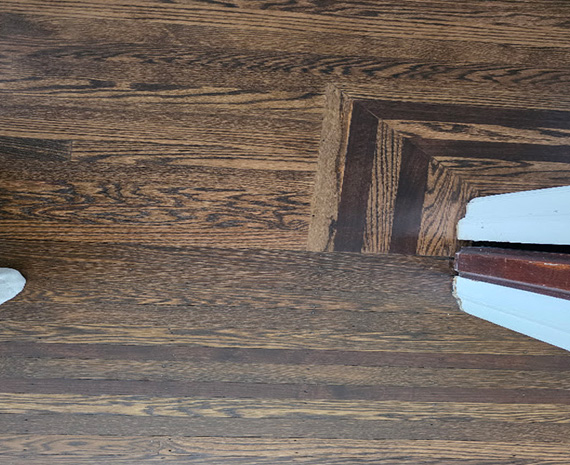 From the foyer to the living room the walnut edging stops. Instead it should be connected to the striping clear through the entry
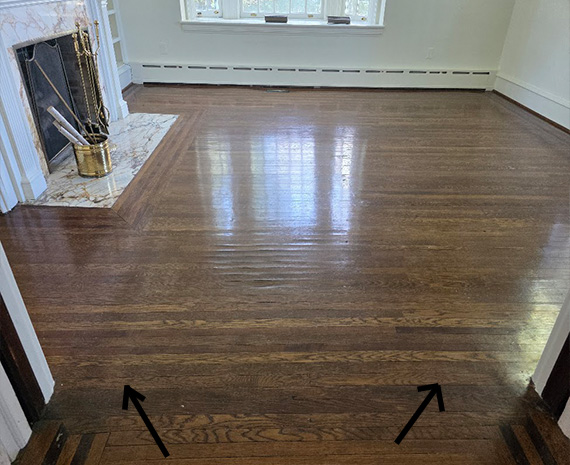 This view shows where the walnut stops where the entry door casing is (to the left & right below the arrows just shy of the door casing.
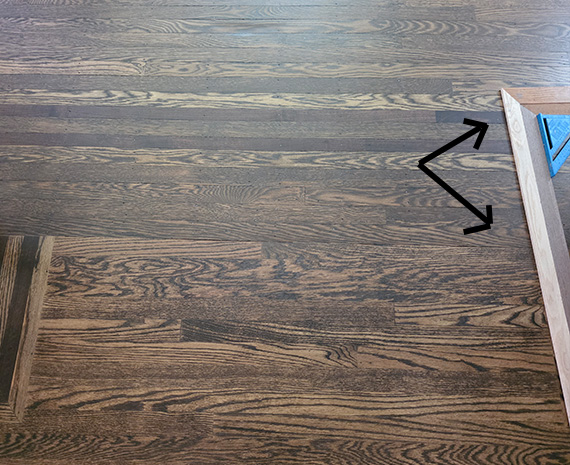 Our wood guy showed our client the angles and such as they wood connect. Actually when completed the angle with be a tad off center, but it will surely connect once he finished the repair.
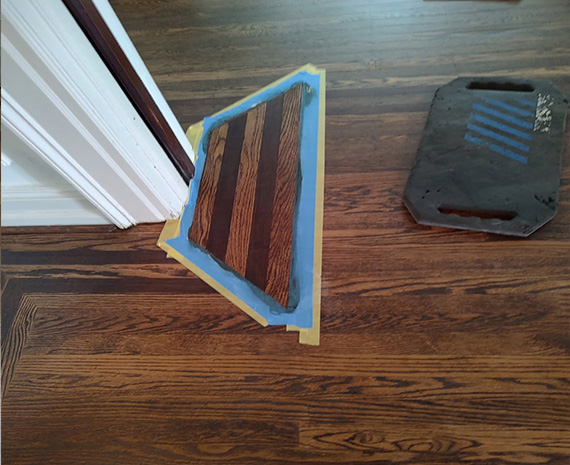 Believe this or not, it took our wood craftsman 2 full days to insert the striping inside the taped areas.
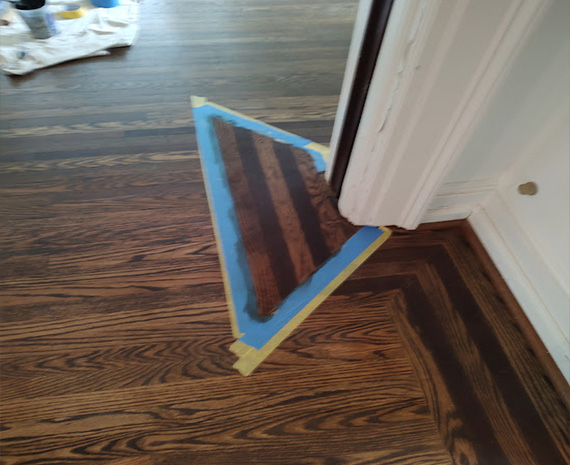 With precision the repair to connect the edging around the door casing was done without disturbing the adjacent areas that were previously finished- "Bravo Team Sparkle!"
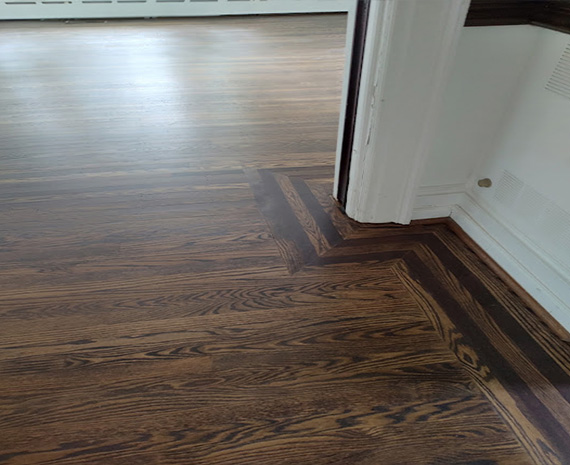 Now completed, the walnut striping connects through the door opening to the living room once more (as it should).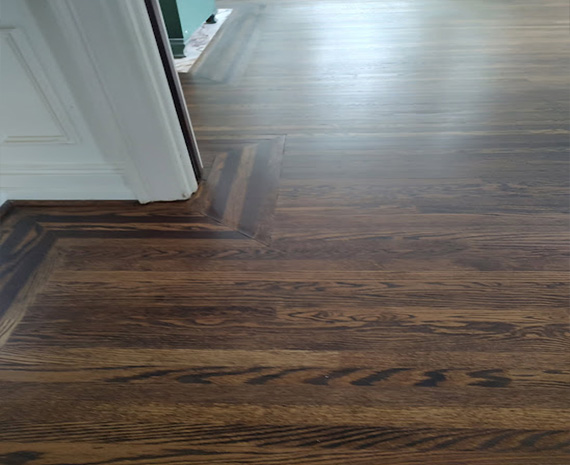

-
Location:
Riverton, NJ
- Job: Historic Hardwood Restoration & Custom Walnut Integration
Along Riverton’s River Line, craftsmanship and continuity were finally restored.
In Riverton, lines matter.
Correcting what others left behind.
The repair was far more complex than it appeared. The living room flooring differed in thickness from the grand foyer. Board widths varied. Angles shifted. Every adjustment required custom fitting and careful calculation to preserve visual continuity throughout the home.
Over the course of more than two days, our craftsman carefully extended and integrated the walnut trim so the transition finally felt intentional and complete. The goal was not perfection through replacement.
The goal was authenticity through craftsmanship.
This same attention to detail extended throughout the property. Transitional boards near the fireplace were leveled and stabilized. Thresholds near the riverfront entry were carefully ground and refined where concrete met hardwood. After the surface was carefully leveled, a custom transition board was fabricated and installed to resolve the unfinished concrete edge that had long disrupted the visual flow of the entryway.
Custom transitions were also fabricated to eliminate uneven lips that were too high and left behind from previous workmanship.
In several overlooked areas, missing walnut trim was finally properly continued around corners and entryways where shortcuts had once interrupted the home’s architectural flow.
A larger restoration story
The custom walnut integration was only one chapter in the ongoing restoration of this historic Riverton estate. Beyond the hardwood floors, extensive work was completed throughout the home’s marble, stone, carpet, and architectural surfaces as the property was prepared for its next generation. Read how we restored Riverton’s Legacy Mansion.
The Difference is in the details.
In luxury and historic homes, craftsmanship is often revealed in the transitions, edges, and finishing details others overlook.